
"high degree"
20000 article(s) found
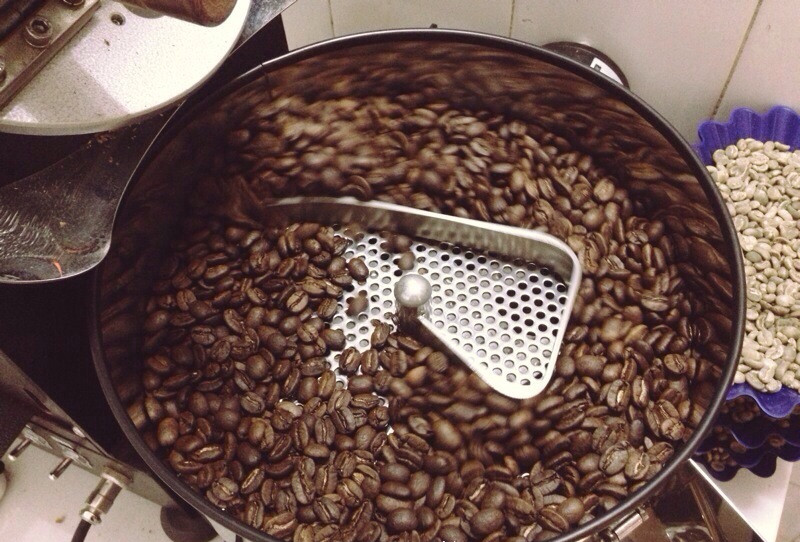
Basic chemical reactions of coffee beans during coffee roasting
Many thermal and chemical reactions take place during baking: decarbonation, dehydration of quinic acid, subdivision, isomerization, polymerization, and complex sugar reactions (caramelization). The main components of the thermal reaction are monosaccharides and sucrose, chlorogenic acid, free amino acids, and fenugreek amide. Both aravinose and calactose in the polysaccharides are transferred, and the basic vulcanization process includes hydroxylamine.

Basic chemical reactions in the roasting process of coffee in both Chinese and English
Original: Basic Chemical Reactions Occurring in the Roasting Process by Carl Staub sourced from the SCAA Roast Color Classification System developed by Agtron-SCAA in 1995 Many thermal and chemical reactions occur during the roasting proces

Explanation of the basic chemical reaction of coffee roasting in both Chinese and English
Original: Basic Chemical Reactions Occurring in the Roasting Process by Carl Staub sourced from the SCAA Roast Color Classification System developed by Agtron-SCAA in 1995 Many thermal and chemical reactions occur during the roasting proces
The basic chemical reactions that take place during coffee roasting
Many thermal and chemical reactions take place during baking: decarbonation, dehydration of quinic acid, subdivision, isomerization, polymerization, and complex sugar reactions (caramelization). The main components of the thermal reaction are monosaccharides and sucrose, chlorogenic acid, free amino acids, and fenugreek amide. Both aravinose and calactose in the polysaccharides are transferred, and the basic vulcanization process includes hydroxylamine.
The basic chemical reactions that take place during coffee roasting.
Many thermal and chemical reactions take place during baking: decarbonation, dehydration of quinic acid, subdivision, isomerization, polymerization, and complex sugar reactions (caramelization). The main components of the thermal reaction are monosaccharides and sucrose, chlorogenic acid, free amino acids, and fenugreek amide. Both aravinose and calactose in the polysaccharides are transferred, and the basic vulcanization process includes hydroxylamine.

The degree of coffee extraction how to extract coffee
Brewing coffee water temperature should be inversely proportional to roasting degree extraction water temperature is not consistent, American electric drip rate kettle due to different brands, mostly controlled in 92 ℃ 96 ℃ constant temperature extraction range, espresso machine according to the baking degree used by each store, the water temperature is set in 88 ℃ 93 ℃ range, basically, the deeper the extraction water temperature is lower, about 88 ℃, the more shallow roasting, the higher the water temperature

The basic chemical reaction of coffee technology in the process of coffee roasting
Many thermal and chemical reactions take place during baking: decarbonation, dehydration of quinic acid, subdivision, isomerization, polymerization, and complex sugar reactions (caramelization). The main components of the thermal reaction are monosaccharides and sucrose, chlorogenic acid, free amino acids, and fenugreek amide. Both aravinose and calactose in the polysaccharides are transferred, and the basic vulcanization process includes hydroxylamine.
Boutique coffee technology roasting degree of coffee beans
Different degrees of heating of raw beans will make coffee beans appear brown to black and other appearance color changes. The index of heating degree is called baking degree. The baking degree is generally distinguished according to the color of the baked beans. The roasting degree of coffee in Japan is generally in the following order: light roasting, cinnamon roasting, medium roasting, high roasting, urban roasting, deep urban roasting, French roasting.
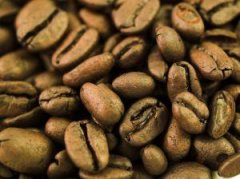
Types of coffee basic knowledge of high-quality coffee beans
Yunnan coffee in China is a product of the tropics. You may not believe that the best coffee producing area in the world is in Yunnan, China.

How to adjust the grinding degree of hario bean grinder-how to adjust manual bean grinder
How to adjust the grinding degree of the hario bean grinder-how to adjust the humidity of the manual bean grinder not only plays a role in sunny and rainy days, but also at different times of the day. Generally speaking, the humidity in the morning and evening is higher than that at noon, so according to the influence of humidity factors, the grinding degree should be thickened in the morning and evening, and finer at noon. Influence grinding
Distribution of Coffee planting bases in the World
Brazil is the producer of coffee. All grades and types of coffee account for 1/3 of the world's consumption. There are many kinds of coffee here. Although there is not much superior coffee, it can be used to make mixed coffee with other coffee. The characteristics of the taste: mild, moderate bitterness, soft aroma. The best fried degree: the output of medium fried Colombian coffee is second only to Brazil.

The characteristics of global coffee reveal what is the difference between Yunnan coffee and foreign coffee?
For the exchange of professional baristas, please pay attention to the coffee workshop (Wechat official account cafe_style) Coffee is the product of 15 degrees north latitude from the equator and is produced in South America, Indonesia and Africa. But the coffee produced from the equator to 15 degrees north latitude is too strong and bitter. In fact, the best coffee should be produced between 15 degrees north latitude and the Tropic of Cancer. [Yunnan Coffee, China] Coffee is

Introduction to the characteristics of different kinds of coffee
Coffee is produced from the equator to 15 degrees north latitude and is produced in South America, Indonesia and Africa. But the coffee produced from the equator to 15 degrees north latitude is too strong and bitter. In fact, the best coffee should be produced between 15 degrees north latitude and the Tropic of Cancer.
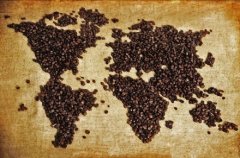
Distribution of Global Coffee planting bases in Coffee Encyclopedia
Brazil is the producer of coffee. All grades and types of coffee account for 1/3 of the world's consumption. There are many kinds of coffee here. Although there is not much superior coffee, it can be used to make mixed coffee with other coffee. The characteristics of the taste: mild, moderate bitterness, soft aroma. The best fried degree: the output of medium fried Colombian coffee is second only to Brazil.

Is it true that "85 degrees C" sued Guangming Milk infringement that "coffee tastes best at 85 ℃"?
Professional coffee knowledge exchange more coffee bean information Please follow Coffee Workshop (Wechat official account cafe_style) recently a Taiwanese company sued Shanghai time-honored Bright Dairy for infringement because the packaging of one of its fresh milk products was marked 85C. However, Guangming Company retorts that this represents a sterilization temperature of 85 degrees Celsius, which is a reasonable mark, and refers to

Effect of different roasting degree on coffee flavor
In the career planning of baristas, with the increasing popularity of boutique coffee in recent years, coffee roasting has become one of the hot learning programs, and new occupations related to it have become more and more mature. Roasters, cup testers, and baristas seem to be three independent occupations. but they have something in common. In addition to the inherent quality of raw beans, the taste of coffee mostly depends on roasting. Incorrect

Global Coffee planting Base Brazil is the place where coffee is produced
Brazil is the producer of coffee. All grades and types of coffee account for 1/3 of the world's consumption. There are many kinds of coffee here. Although there is not much superior coffee, it can be used to make mixed coffee with other coffee. The characteristics of the taste: mild, moderate bitterness, soft aroma. The best fried degree: the output of medium fried Colombian coffee is second only to Brazil.
Introduction to the characteristics of different kinds of coffee
As we all know, coffee is the product of 15 degrees north latitude from the equator, so it is produced in South America, Indonesia and Africa. However, the coffee produced from the equator to 15 degrees north latitude is so strong and bitter that only some people who drink coffee and do not know its taste will like it. In fact, the best coffee should be produced between 15 degrees north latitude and the Tropic of Cancer. Coffee is the product of the tropics, said
Introduction to the characteristics of different kinds of Coffee
As we all know, coffee is the product of 15 degrees north latitude from the equator, so it is produced in South America, Indonesia and Africa. However, the coffee produced from the equator to 15 degrees north latitude is so strong and bitter that only some people who drink coffee and do not know its taste will like it. In fact, the best coffee should be produced between 15 degrees north latitude and the Tropic of Cancer. Coffee is the product of the tropics, said
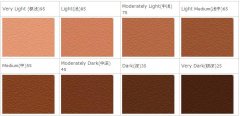
Roasting degree resolution chart of roasting knowledge of high-quality coffee beans
The above color is only for reference to distinguish according to the roasting degree of each country, which is also the earliest distinction of roasting degree of coffee. Because the roasting degree of coffee varies from country to region, it is known as roasting degree by country or region, such as Italian roasting, French roasting and so on. However, the baking degree of these different preferences are integrated and arranged from shallow to deep to form the baking degree.